
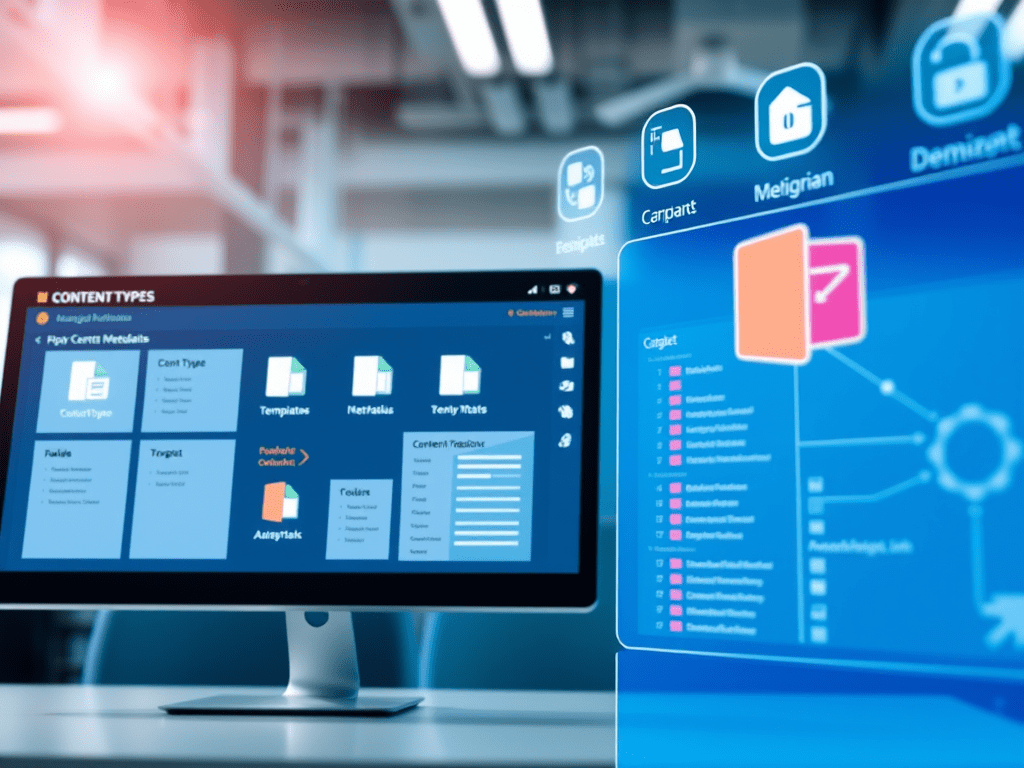
If you’re running a business or managing a team with SharePoint Online, you’ve probably heard about content types, site columns, and managed metadata. But what’s the real deal with these features, and why should you care? Let’s break it down in plain language, focusing on how they help you keep your publishing pages consistent and easy to manage—especially when you’re working across multiple site collections.
Why Content Types and Site Columns Matter
Imagine you have dozens or even hundreds of sites in SharePoint, each with its own sets of documents, pages, and data. Without a system, you’d end up with chaos: different names for the same thing, documents missing key info, and a nightmare whenever you need to find something specific. That’s where content types and site columns come in.
Content types are like templates for your documents or pages. They bundle together the metadata (extra info like author, status, or department) that you need for a specific kind of content. For example, a “Project Proposal” content type might include columns for project name, manager, and due date. You can reuse these content types across lots of sites and libraries, which means everyone uses the same structure and the same terms.
Site columns are the building blocks of content types. Instead of creating a new column every time you need to track something, you create a site column once and reuse it everywhere. That way, “Department” is always called “Department,” not “Dept,” “Div,” or something else, depending on who set up the list.
Managing Metadata for Publishing Pages
When you’re publishing pages across multiple site collections, you want consistency. Managed metadata takes things a step further by giving you a central place to manage terms—like departments, project stages, or document types—and make sure everyone uses them the same way.
With managed metadata, you can:
- Control the terms people use: No more typos or creative spellings. If you set up “Marketing” as a department, everyone picks it from a list, not types it in.
- Update terms in one place: If you rename “Marketing” to “Branding,” the change applies everywhere automatically.
- Support multilingual environments: You can add labels in different languages, so users see terms in their preferred language.
- Make navigation smarter: You can build navigation menus and filters based on metadata, so users find what they need faster.
Publishing Content Types Across Site Collections
If you only use content types and site columns at a single site, you’re missing out. SharePoint lets you publish content types from a central “hub” site to other site collections, so everyone in your organization can use the same templates and metadata. This is called content type publishing or syndication.
Here’s how it helps:
- Consistency: Everyone uses the same content types and site columns, so documents and pages look and feel the same across the whole company.
- Easier management: Updates to content types or metadata happen in one place and ripple out to all connected sites.
- Better search and discovery: When metadata is consistent, it’s much easier to find what you’re looking for, no matter which site collection it’s in.
- Simpler compliance and records management: When you need to find all contracts or proposals, standardized metadata makes your life a lot easier.
SEO and User Experience
Using content types, site columns, and managed metadata isn’t just about keeping things tidy—it also boosts your SharePoint’s usability and helps with SEO (search engine optimization) for your intranet or public-facing sites.
- Consistent tagging: When every page or document is tagged the same way, search engines (and users) can find what they need faster.
- Better navigation: Metadata-driven navigation means users can filter and drill down into content, improving the overall user experience.
- Less manual work: Automated metadata and default values mean users spend less time filling out forms and more time getting work done.
Adopting content types, site columns, and managed metadata in SharePoint Online is a smart move for any organization that wants to keep its publishing pages consistent, easy to manage, and user-friendly—especially when working across multiple site collections. It’s a simple way to bring order to chaos, make life easier for your users, and keep your data organized and searchable.
Content Types: Examples and Benefits
Example 1: Project Proposal Content Type
- Columns: Project Name, Project Manager, Due Date, Status
- Workflow: Automatically sends the proposal for review when created
- Template: A Word document pre-filled with the project name and manager
- Use case: Every time someone needs to create a new project proposal, they use this content type. All proposals have the same structure and metadata, making them easy to find and manage—even across different site collections.
Example 2: Employee Onboarding Content Type
- Columns: Employee ID, Department, Onboarding Date, Checklist Status
- Workflow: Notifies HR when a new onboarding document is added
- Template: An onboarding checklist form
- Use case: HR can use this content type across all onboarding sites, ensuring every new hire’s process is tracked the same way.
Site Columns: Examples and Benefits
Example 1: Department Site Column
- Type: Choice (dropdown menu)
- Options: Marketing, Sales, IT, HR, Finance
- Use case: You add this column to a “Project Proposal” content type and a “Meeting Minutes” list. Everywhere you use this column, the choices are the same, so reporting and filtering are consistent across the organization.
Example 2: Contract Expiration Date Site Column
- Type: Date and Time
- Settings: Date only, required field
- Use case: You add this column to a “Contract” content type and a “Legal Documents” library. All contracts have an expiration date, and you can easily run reports to see which ones are expiring soon.
Managed Metadata: Examples and Benefits
Example 1: Product Category Taxonomy
- Term set: Products
- Terms: Software, Hardware, Services
- Subterms under Software: CRM, ERP, Analytics
- Terms: Software, Hardware, Services
- Use case: You add a managed metadata column for “Product Category” to your “Sales Proposal” content type. When users create a proposal, they select the appropriate product category from the dropdown. This makes it easy to filter and find all proposals related to, say, CRM software—across all site collections.
Example 2: Document Status Managed Metadata
- Term set: Status
- Terms: Draft, In Review, Approved, Archived
- Use case: You add a managed metadata column for “Document Status” to your “Policy” content type. All policy documents are tagged with a status, and you can quickly find all documents awaiting approval, no matter which site collection they’re in.
Imagine you’re managing a company intranet with multiple departments, each with its own site collection. By using content types, site columns, and managed metadata, you ensure that:
- Every project proposal has the same fields and structure, no matter where it’s created.
- Department names are always spelled the same way and selected from a dropdown.
- Product categories and document statuses are centrally managed and updated, so changes reflect everywhere automatically.
This approach saves time, reduces errors, and makes it much easier to find and manage content across your entire SharePoint environment.
Looking to take your SharePoint Online setup to the next level? Content types, site columns, and managed metadata are your secret weapons for organized, consistent, and searchable content—no matter how many site collections you manage. Want expert help or tailored solutions for your business? Check out torpedo.pt for more insights and support!





 Arsénio Ferraz
Leave a comment